The role of auctions in the art market: An in-depth look at trends and analyses
overview
Auctions form the vibrant heart of the global art market. They function not only as highly efficient trading platforms, but above all as precise barometers for current market trends and the performance of artists. In an era of advancing digitalization, new platforms are opening access to this once exclusive circle and creating unprecedented transparency. For strategic art collectors, thorough preparation is therefore the crucial key to recognizing opportunities in a timely manner and capitalizing on them successfully.
Contents
The art market is a highly dynamic ecosystem in which auctions play the central role of pacesetter. They are far more than mere sales platforms; they serve as a validation tool for artistic relevance and as an indicator of the sector's economic health. In this analysis, we examine the mechanisms of auction houses, their strategic importance for collectors, and how they define contemporary art trends.
What are auctions and how do they work?
An art auction is a structured bidding process in which works of art are publicly auctioned under the direction of an auctioneer. The participants are diverse, ranging from passionate private collectors to institutional curators and gallery owners. The process is divided into clear phases:
Expertise & Cataloging: Specialists from the auction house assess the authenticity, quality and provenance in order to establish a sound estimated price range.
The preview: Before the actual date, the lots are displayed so that interested parties can personally inspect the physical condition of the works.
The bidding war: The auctioneer announces the starting bid. The price increases in predetermined increments through hand signals, phone calls, or online bids.
The auction: The purchase contract is concluded when the gavel falls. The buyer adds the so-called "buyer's premium" (commission) and, if applicable, taxes to the hammer price.
The importance of auctions in the art market
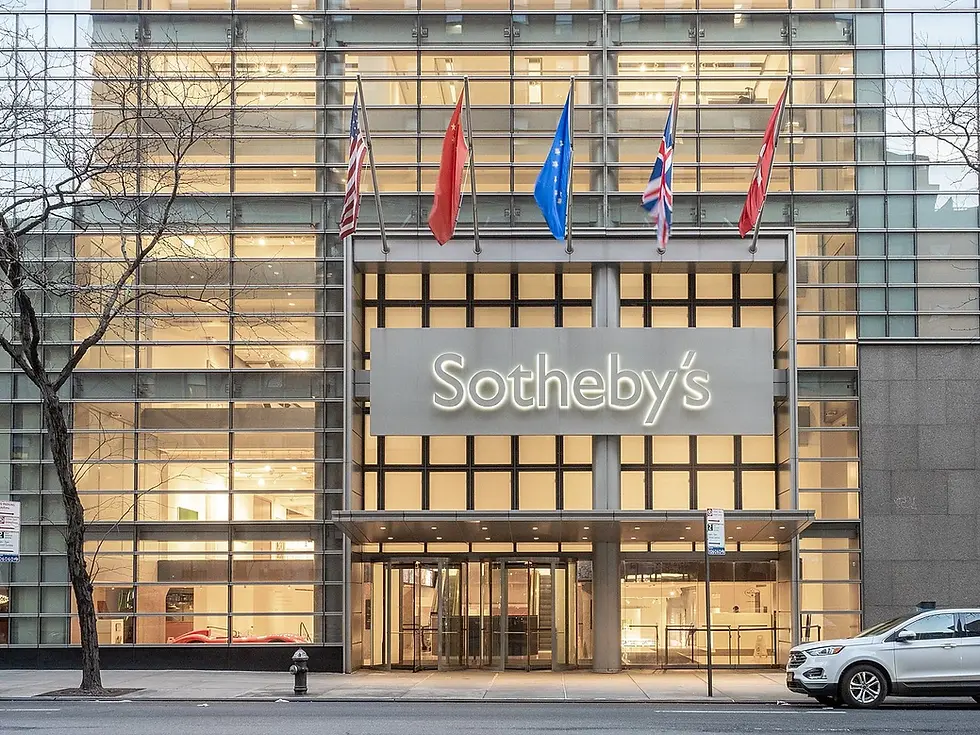
Auctions fulfill an essential price-finding function. Unlike the primary market in galleries, where prices are often handled discreetly, the auction result is a public statement. A strong result at Christie's or Sotheby's can transform an artist's market position overnight. The competitive pressure there often leads to record prices, which serve as benchmarks for future transactions and insurance.
Art collector tips for visiting auctions
Success at an auction is rarely the result of impulsiveness, but of discipline. Consider the following strategies:
Deep-dive research: Study the catalogue of works and request detailed condition reports.
Market analysis: Use databases to compare the performance of similar works by the same artist over the past few years.
Financial discipline: Set yourself a strict limit. Factor in the surcharge (usually 25-30%) in advance to avoid unpleasant surprises when you receive the bill.
Atmospheric training: First attend auctions as an observer to understand the psychology of bidding and the pace of the auctioneer.
Identifying current art trends through auctions
Auction data is the most valuable raw material for any art market analysis. The development of hammer prices mercilessly reveals which styles are gaining momentum. Currently, it can be observed that the focus is shifting massively towards "ultra-contemporary art"—young, often female artists or artists from the "Global South" who have long been underrepresented in classical canons. When works by these artists multiply their estimated prices, it signals a lasting shift in collector preferences.
Curatorial decisions and auctions
Behind every successful auction lies a curatorial strategy. Auction houses assemble their evening sales like museum exhibitions to create narratives. By placing, for example, a work by an established master alongside that of an emerging talent, a historical continuity is suggested, which bolsters the newcomer's market value. This curated selection significantly influences which aesthetics are considered "investment-worthy" in the coming quarter.
The future of auctions in the art market
Digital transformation has broken down the formerly elitist barriers. Hybrid auctions, which combine live streaming with global online bidding, are now the standard. This leads to greater liquidity and a democratization of the market. Furthermore, some auction houses are experimenting with blockchain technology for seamless provenance documentation, which strengthens trust in both digital and physical transactions.
Conclusion: Auctions as a key to art market insights
Auctions are far more than a marketplace – they are the stage where cultural capital is translated into financial value. For collectors, they offer the unique opportunity to acquire museum-quality works while simultaneously gaining profound insights into the psychology of the market. Those who understand the mechanisms behind the gavel become not just buyers in the art market, but strategic players.
FAQs
What are auctions?
Auctions are events where works of art and other items are auctioned off.
How do auctions work in the art market?
The process begins with an appraisal of the value of a work of art, followed by its presentation and finally its auction.
Why are auctions important for the art market?
Auctions offer visibility for artists and sales platforms for collectors, which means that competition can significantly increase the value of artworks.
What tips are there for art collectors who want to attend auctions?
Important factors include research, an analysis of the art market, a set budget, and observing previous auctions.
What role will digital auctions play in the future of the art market?
Digital auctions offer broader access to artworks and increase transparency, as bidders can track sales in real time.


Comments