The most expensive artworks of 2025: Insights and trends

overview
The global art market demonstrated remarkable resilience at its very top in 2025. Despite a complex macroeconomic environment, historical masterpieces fetched record prices, driven by a massive "flight to quality" among top collectors. As the digital art sector consolidates after the hype, sustainability (ESG criteria) and immersive large-format works increasingly define the institutional discourse. Major events like the Venice Biennale serve as the ultimate validators for price trends. For collectors, the strategy is clearer than ever: data-driven acquisition, rigorous networking, and an absolute focus on blue-chip quality.
Contents
The art market is a highly sensitive ecosystem that underwent a significant recalibration in 2025. Ultra-high-net-worth individuals (UHNWIs) increasingly parked their capital in crisis-proof assets, leading to spectacular auction results for established works. In this market analysis, we deconstruct the year's top sales, analyze the key value drivers, and provide strategic insights for future-proofing portfolios in this competitive environment.
The most expensive works of art of 2025
By 2025, it had become clear that the market was massively rewarding historical masterpieces with impeccable provenance. The Evening Sales in New York and London were dominated by museum-quality objects—the so-called "trophy assets." The most outstanding results were not speculations, but fundamentally sound investments from legendary private collections.
Here is the official top 10 highest auction prices of the year:
10. Pablo Picasso, La lecture (Marie-Thérèse) (1932) After a quieter previous year, Picasso returns to the top 10. The portrait of his muse from the Ross Weis Collection fetched $45.48 million at Christie's.

9. Claude Monet, Nymphéas (1907) A classic deaccessioning scenario: The Kawamura Memorial DIC Museum in Japan parted ways with this water lily masterpiece, which changed hands at Christie's for $45.48 million, matching the Picasso.

8. Piet Mondrian, Composition with Large Red Plane, Bluish Gray, Yellow, Black and Blue (1922) A market first for the top 10: Christie's placed the work from the Riggio Collection back in May for $47.56 million . While not an individual record for the De Stijl pioneer, the result underscores institutional demand for early abstraction.

7. Jean-Michel Basquiat, Crowns (Peso Neto) (1981) Basquiat remains the undisputed guarantor of top prices in contemporary art. Sotheby's auctioned the work from a European private collection in "The Now" auction for $48.33 million .

6. Frida Kahlo, El sueño (La cama) (1940) A historic milestone: With a hammer price of $54.66 million at Sotheby's, Kahlo dethroned Georgia O'Keeffe as the most expensive female artist in auction history. A massive signal for the re-evaluation of female artists in the top segment.

5. Mark Rothko, No. 31 (Yellow Stripe) (1958) Also from the Ross Weis collection, this Christie's lot, which sold for $62.16 million, confirmed the continued dominance of Abstract Expressionism among institutional collectors.

4. Vincent van Gogh, Piles de romans parisiens et roses dans une verre (1887) From the renowned Pritzker Collection, this still life created in Paris fetched a strong 62.71 million USD at Sotheby's, securing a place among the eight most expensive Van Goghs worldwide.

3. Gustav Klimt, Forest Slope near Unterach am Attersee (1916) The auction of the estate collection of Estée Lauder heir Leonard A. Lauder at Sotheby's dominated the autumn. This landscape, with a sale price of $68.32 million, marked the start of an unprecedented Klimt hat trick.

2. Gustav Klimt, Flower Meadow (around 1908) Another highlight of the Lauder collection: The work clearly surpassed the landscape depiction and was auctioned for 86.00 million USD .

1. Gustav Klimt, Portrait of Elisabeth Lederer (1914-16) A historic market event: Gustav Klimt is the first artist to occupy the top three spots in a single auction year. The centerpiece of the Lauder collection exceeded all expectations, fetching a breathtaking $236.36 million on November 18, 2025. This makes it not only the most expensive work of modern art, but also the second most expensive painting ever sold at public auction.
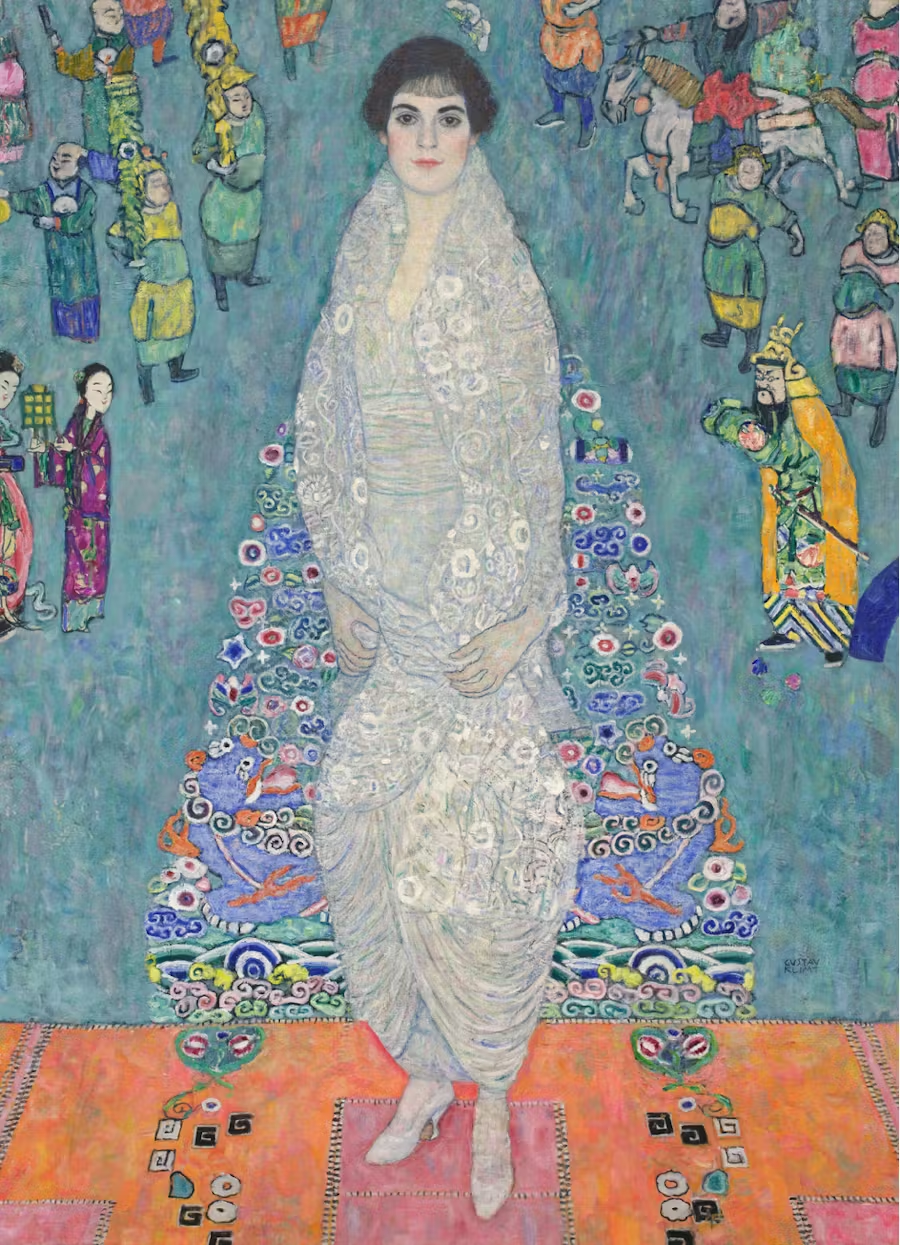
The art market analysis clearly shows that collectors are willing to pay exorbitant sums for exclusivity, rarity and art historical significance, while the middle market is significantly more selective.
Art trends that slow down or promote the market
The dynamics of top sales can only be deciphered by understanding the underlying market trends. By 2025, clear shifts in capital allocation were evident:
Digital art and NFTs: After the speculative gold rush of previous years, this sector is in a consolidation phase. Institutionally verified digital art and blockchain technology for provenance verification are maintaining their value, while the unregulated mass market has lost liquidity.
Environmentally conscious art: ESG criteria (Environmental, Social, Governance) have reached the high-end art market. Works that address ecological narratives or are sustainable in their material composition are experiencing a noticeable increase in corporate collections.
Interactive art: Experiential large-format works and immersive installations dominate the acquisitions of major foundations. The market values the ability to radically engage the audience as a new value driver, which is also increasingly shaping curatorial practices in mega-galleries.
The curation of exhibitions centered around these trends is also crucial for increasing the visibility of artists and their work. Galleries are focusing on innovative concepts that offer viewers not just a passive experience, but also the opportunity to become part of the artistic process.
Important exhibitions of the year 2025
Exhibitions are no longer purely academic events – they are the primary drivers of pricing. In 2025, three major events dictated the calendars of global players:
The Venice Biennale once again served as the ultimate validation authority. Artists who excelled in the national pavilions often experienced drastic price increases and closed waiting lists on the primary market within the same week.

Quelle: Courtesy La Biennale di Venezia Art Basel: The undisputed barometer for global liquidity. In 2025, the leading Swiss art fair showed a clear return to risk-minimized blue-chip works and rigorously curated historical positions.

Quelle: Art Basel Miami Art Week, the art fair in Miami, focused in the fourth quarter on emerging markets and ultra-contemporary art, further calibrating collector interest at the end of the year. The exclusivity of these platforms and their rigorous curation are key factors in their appeal to investors.

Quelle: Oriol Tarridas
Art collector tips for 2025 and beyond
Successful collecting in this price segment requires discipline and strategic foresight. Here are the key principles for the current market environment:
Get informed (Data is King): Decisions must be data-driven. Track auction sell-through rates and institutional acquisitions before investing in an artist.
Network (Access is Everything): In a market where coveted works are sold before a fair even opens, direct, personal access to gallery owners and art advisors is your most valuable asset.
Find your own style (rigorous curation): Avoid trend-driven "FOMO" (Fear of Missing Out) buying. Collections that achieve historical relevance are characterized by an uncompromisingly individual and sharp focus.
Focus on quality over quantity: The "Flight to Quality" remains the guiding principle. An excellent "A-grade" work always performs better as an investment in the long run than a diversified portfolio of mediocre works.
The future of the art market
The art market is recalibrating. The results for 2025 demonstrate an increasing market bifurcation: while undeniable masterpieces fetch historically unprecedented sums, the contemporary sector demands far more rigorous quality control from buyers. Today's curators are shaping tomorrow's market trends by firmly establishing long-overlooked narratives within the canon. The future belongs to those who can distinguish substantial art history from short-lived hype and strategically invest in these visions.
Feel free to browse our showroom for inspiration.
FAQs
What are the most expensive works of art in 2025?
In 2025, the top of the market was dominated by historical blue-chip works. Leading the pack were paintings of classical modernism and abstract expressionism, such as works by Klimt, Magritte, or Rothko, which fetched prices well in excess of the $100 million mark at major auction houses.
Which art trends influenced the market in 2025?
The market has been strongly influenced by consolidation in the field of digital art (NFTs), a massive increase in institutional demand for environmentally conscious art (ESG focus), and a boom in immersive, interactive large-scale installations.
What were the major exhibitions in 2025?
The most important market drivers were the Venice Biennale as a global trendsetter and validation authority, Art Basel as a barometer for blue-chip liquidity, and the art fairs in Miami as a platform for concluding the acquisition year.
What are some tips for art collectors in 2025?
Collectors should consistently operate in a data-driven manner (analyzing auction results), maintain strategic networks for primary market access, develop a highly curated, individual style, and follow the guiding principle of "quality over quantity".
How will the art market develop in the future?
We are observing a clear bifurcation: Demand for crisis-proof "trophy assets" and historical masterpieces will continue to rise, while the contemporary art market is undergoing more rigorous curatorial selection. Future investments will require an even deeper understanding of art historical relevance.


Comments